Flowers Butterflies Border Review
As an embroidery designer who spends countless weekends setting up booths at craft fairs and handmade markets, I have learned that the difference between a sale and a missed opportunity often comes down to visual impact. When I first looked at the Flowers Butterflies Border pattern, my immediate reaction was one of cautious optimism. The description promises an abstract floral ornament that gives fabrics an extraordinary look, which is exactly the kind of versatile asset every Etsy seller or boutique maker needs. However, turning a digital concept into a physical craft fair product requires more than just hope; it demands a critical eye for detail, production viability, and market appeal.
First Impressions and Visual Appeal
The title Flowers Butterflies Border suggests a design that balances organic softness with structured elegance. In the world of handmade goods, "abstract floral" can be a double-edged sword. If executed poorly, it can look messy; if done well, it looks premium. Based on the description, this embroidery file aims for that sweet spot where decorative meets modern. It does not scream for attention like a bold graphic print, but rather invites the customer to lean in closer—a crucial trait for booth engagement.
When I imagine this design on a table display, it feels best suited for a farmhouse or soft-elegant aesthetic. It lacks the ruggedness of a rustic patch or the humor of a novelty item. Instead, it offers a sense of refined craftsmanship. For customers browsing through stacks of tote bags and aprons, this border provides a clean, sophisticated frame that elevates the entire piece. It signals quality without being overly loud, which is perfect for attracting buyers looking for giftable handmade items that feel special yet wearable.
Product Versatility and Market Fit
One of the biggest challenges for small shop owners is creating inventory that feels cohesive yet diverse. The Flowers Butterflies Border excels in versatility. Because it is designed as a border, it naturally fits products with defined edges or panels. Here is how I see it performing across key categories:
- Tote Bags and Market Bags: This is perhaps the strongest application. A border running along the top hem or framing a central panel on a canvas tote bag instantly transforms a plain bag into a tote bag design worth paying for. It adds structure to the fabric and draws the eye to the handle area, where customers often grip the bag.
- Apron Embroidery: Aprons are a staple at craft fairs. Placing this border along the bib or the bottom hem of an apron creates a polished, professional look. It works particularly well on solid-colored cottons, offering a touch of whimsy without overwhelming the garment’s functionality.
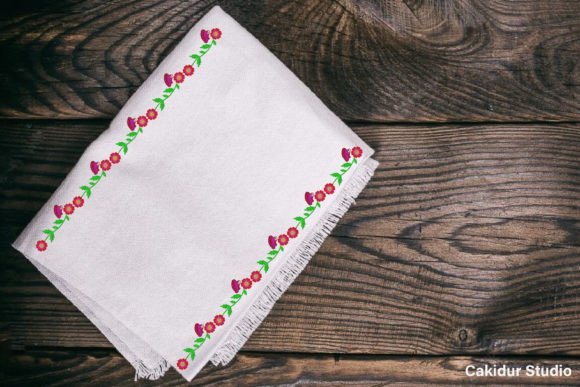
- Tea Towel Embroidery: Kitchen textiles are high-volume sellers. A delicate floral border on a tea towel feels homey and inviting. However, care must be taken here regarding fabric texture. The looped weave of some towels can obscure fine details, so testing is essential.
- Embroidered Patch and Caps: While borders are linear, they can be adapted for patches by curving them or using a segment of the design. On caps, a curved border along the brim edge could look stunning, provided the hoop size and cap curvature allow for proper tension.
- Pillow Covers and Pouches: For smaller items like fabric pouches or pillow shams, this border acts as a focal point. It frames the opening or the front panel beautifully, making these small small shop product items feel substantial and well-designed.
Production Realities and Technical Considerations
Designing for art is different from designing for production. Before committing to a batch run for a weekend market, I always evaluate the technical aspects of a machine embroidery design. The Flowers Butterflies Border description mentions "abstract floral," which often implies varied stitch directions and potentially dense areas.
Stitch Density and Detail: Abstract designs can sometimes suffer from clutter if the stitch density is too high. If the flowers and butterflies are rendered with tiny, intricate stitches, they may lose clarity when embroidered on textured fabrics like denim or thick canvas. I advise checking the stitch density closely. If the design relies on negative space to show its beauty, ensure your thread colors provide enough contrast against the base fabric. Dark fabrics, in particular, can swallow up light-colored threads, making the design look muddy rather than elegant.
Hoop Size and Spacing: Since this is a border, the hoop size must accommodate the full length of the repeat or the specific placement you intend. If you are planning to use this on wide aprons or large pillows, confirm that the design scales well. Does it look stretched? Does it lose definition? Always create at least one real mockup on the actual fabric you plan to sell. Digital previews can be deceiving; nothing beats seeing how the threads interact with the fabric texture in person.
Stabilizer Selection: The choice of stabilizer can make or break a border design. Borders often require stability to prevent puckering, especially if they are placed near seams or stress points. For lightweight fabrics, a cut-away stabilizer might be necessary to maintain integrity over time. For heavier materials, a tear-away might suffice, but you must test for pull. If the design pulls the fabric too much, the border will distort, ruining the clean lines that make it attractive in the first place.
Photography and Online Presentation
In today’s market, your printable mockup is just as important as the physical product. The Flowers Butterflies Border has strong photographic potential because of its linear nature. It photographs well because it guides the viewer’s eye across the image. When creating listings for Etsy or your own website, use close-up shots to highlight the texture of the threads and the precision of the stitching. Show the design on different backgrounds to demonstrate its adaptability. A white background emphasizes cleanliness, while a natural wood or linen background enhances the rustic, handmade charm.
Strategic Selling Points
Why should you choose this design for your booth? First, it appeals to a broad demographic. It is not niche enough to alienate buyers, yet unique enough to stand out from mass-produced goods. Second, it allows for brand consistency. If you use this border across multiple product lines—totes, towels, and aprons—you create a recognizable visual identity for your shop. Customers begin to associate that specific floral style with your brand’s quality.
Furthermore, this design supports batch production. Borders are generally faster to embroider than complex, multi-hooped centerpieces because they often require fewer color changes and less repositioning. This efficiency translates to higher profit margins, allowing you to price your commercial embroidery products competitively while still valuing your time.
Final Designer Notes
Before you finalize your inventory list, remember to verify the digital embroidery file specifications. Check the recommended thread colors and ensure you have those shades in your stash. Review the spacing to ensure it aligns with your standard product dimensions. Most importantly, confirm the commercial licensing terms. Just because you bought the file does not automatically grant you the right to sell finished goods unless explicitly stated.
The Flowers Butterflies Border shows great promise as a versatile, elegant addition to any crafter’s repertoire. It balances artistic flair with practical application, making it a smart choice for anyone looking to elevate their handmade product offerings. By testing thoroughly and presenting it with care, you can turn this simple border into a standout seller at your next craft fair or online store.